Three Models Connecting Lodges and Research
Long-term tropical ecology is notoriously expensive to maintain. Diesel riverboats, boardwalk repairs, laboratory freezers, and resident botanists require steady funding between university grant cycles. Across the tropics, three distinct institutional models have evolved to let educational visitors share space with working scientists without distorting data collection.
First are consortium-run biological stations such as those coordinated by the Organization for Tropical Studies (OTS) at La Selva, or sites overseen by the Smithsonian Tropical Research Institute (STRI) including Barro Colorado Island in Panama. Here, visiting researchers hold priority over bunks, lab benches, and trail permits; day visitors or non-specialist guests enter strictly on scheduled interpretive walks led by station educators.
Second are university-affiliated forest reserves—for example, Tiputini Biodiversity Station managed by Universidad San Francisco de Quito (USFQ), or the Daintree Rainforest Observatory operated by James Cook University in Queensland, Australia. Third are conservation-owned lodges like Tambopata Research Center, Manu Learning Centre, or SEARRP partner facilities in Borneo, where visitor lodging revenue underwrites habitat protection, ranger patrols, and long-term macaw or primate monitoring.
How Visitor Observations Become Useful Data
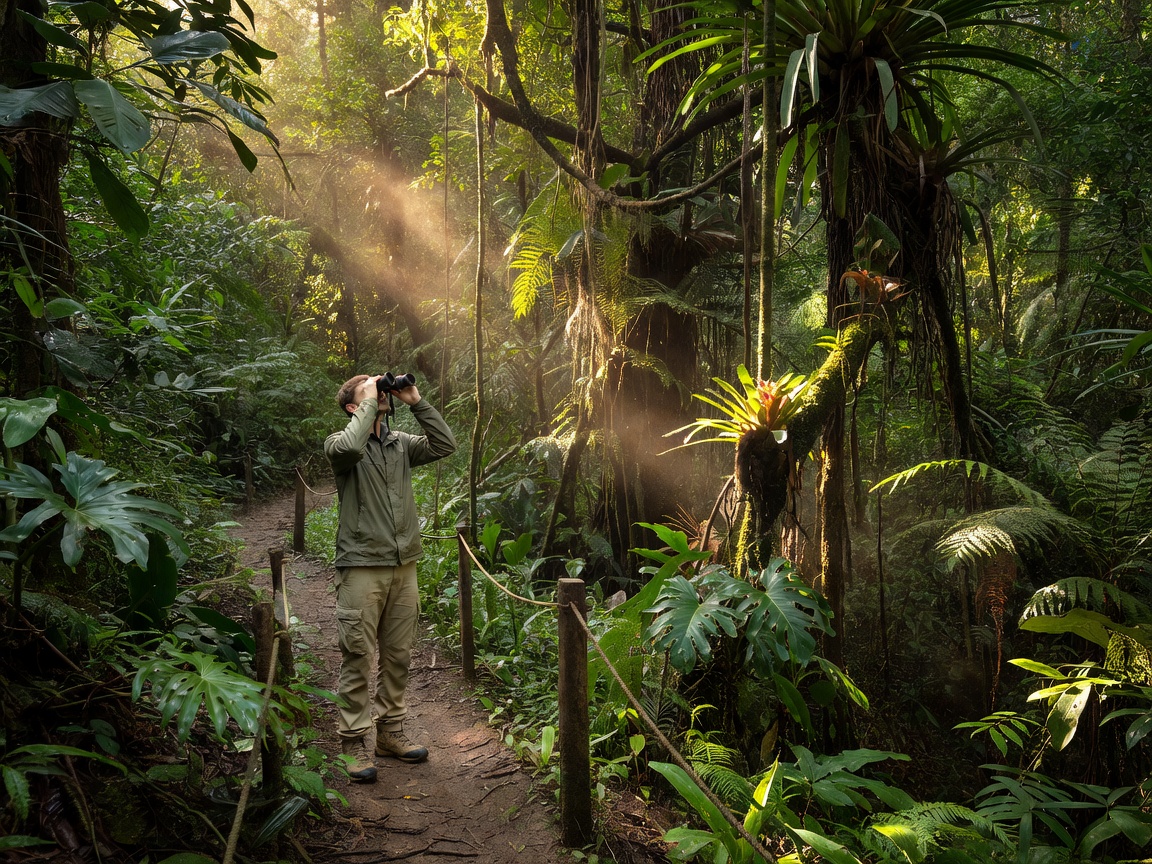
Even when you cannot enter a restricted experiment, your eyes and ears can still contribute verified natural-history records—provided those sightings follow clear metadata standards.
When guides help visitors upload crisp, geotagged photographs to iNaturalist or complete stationary checklists on eBird (maintained by the Cornell Lab of Ornithology), expert identifiers verify species names before records flow into the Global Biodiversity Information Facility (GBIF). Over ten or twenty years, thousands of verified visitor checklists help map elevation shifts as tropical mountain species track warming temperatures upslope.
By contrast, permanent forest census plots—such as the 50-hectare dynamics grids within the ForestGEO network—measure every woody stem down to one centimeter in diameter every five years. Those censuses rely on calibrated calipers, botanical vouchers, and trained teams rather than casual visitor counts.
Questions to Ask Before Calling a Stay "Research-Backed"
Anyone evaluating an educational rainforest lodge can apply a simple five-point checklist drawn from public science-communication standards and organizations like Tropenbos International and the Tropical Science Center (CCT):
-
1. Can the Lodge Name Published Papers or Open Datasets?
Active stations list peer-reviewed studies, institutional annual reports, or GBIF/eBird station hotspots rather than vague phrases about "supporting research."
-
2. Are Wildlife Interactions Strictly Hands-Off?
Legitimate research stations prohibit tourists from holding frogs, sloths, or mist-netted birds for photographs. Whenever a lodge charges guests to pose with wild animals, scientific credibility ends.
-
3. Do Local Guides Receive Ongoing Training?
Strong stations pair visiting scientists with local community guides so ecological findings flow back into the region’s schools and interpretive programs rather than staying locked in foreign journals.