Why Dawn Matters More Than Distance
In lowland tropical forests—whether along the Sarapiquí River at La Selva Biological Station in Costa Rica or deep inside Borneo’s Danum Valley Field Centre—the first two hours after civil twilight hold the highest acoustic density of the day. Cooler air carries territorial bird calls and primate choruses cleanly under the canopy before convective heat and afternoon rainstorms scramble sound waves.
For visitors accustomed to leisurely hotel breakfasts, a 05:15 boot-room departure can feel abrupt. Yet waking early is not theatrical; it aligns your walk with the same temporal window used by station ornithologists and phenology technicians. When a guide pauses at a numbered PVC stake every fifty meters for a standardized five-minute count, you are witnessing the grammar of ecological sampling: fixed time, fixed radius, repeatable conditions.
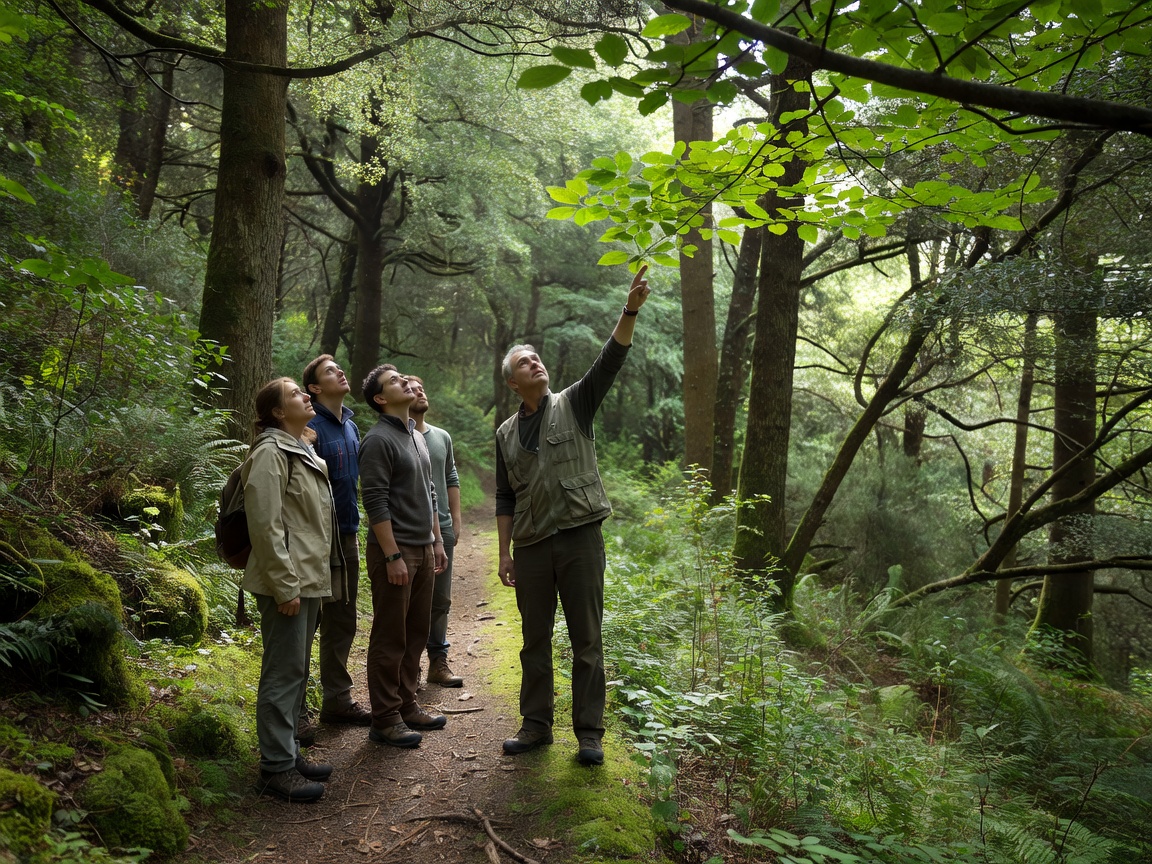
Rather than chasing rare mammals across ten kilometers of muddy trail, field-oriented stays teach patience on shorter loops. Covering eight hundred meters in two hours lets you trace leafcutter ant foraging highways, inspect epiphyte gardens on fallen branches, and compare light gaps created by a single treefall.
Inside Mid-Morning Station Work
Once midday heat settles over the upper canopy, field activity shifts from wide-ranging walks to structured maintenance and laboratory sorting. At hubs such as the Manu Learning Centre in southeastern Peru (operated by the Crees Foundation) or Tiputini Biodiversity Station on the edge of Ecuador’s Yasuní National Park, mid-morning reveals the unglamorous backbone of rainforest science: labeling, drying, calibrating, and checking batteries.
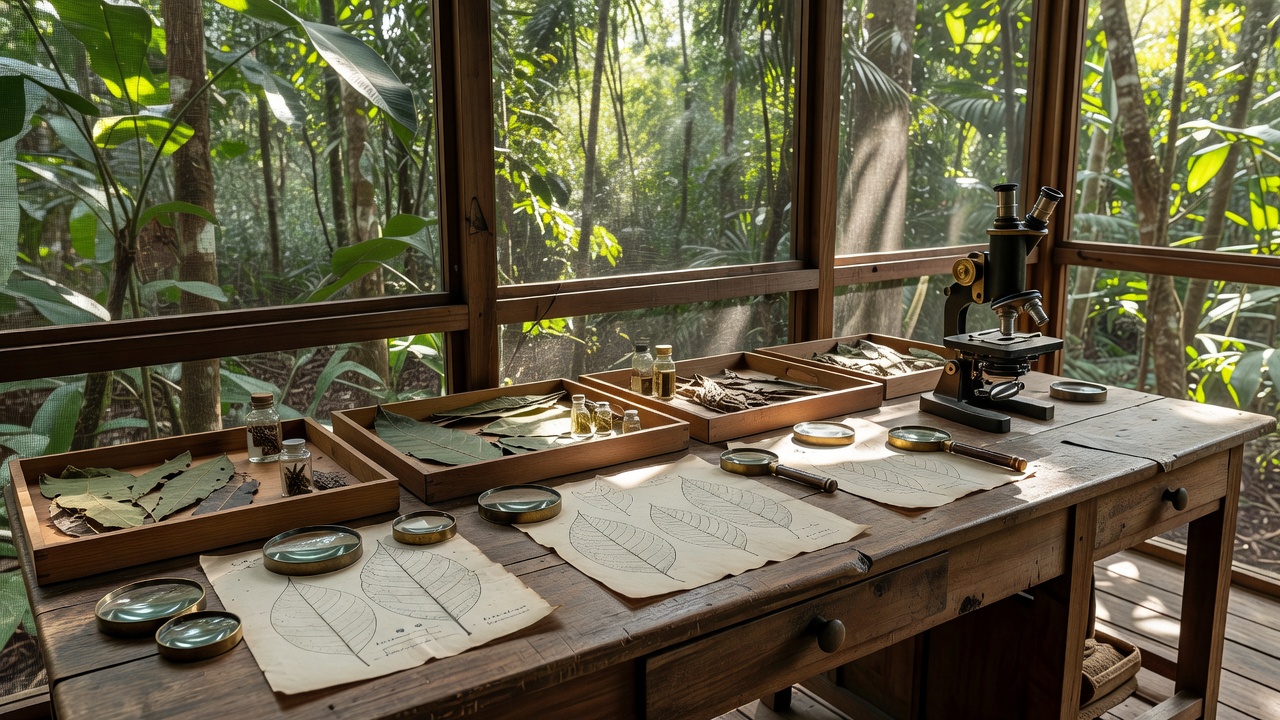
Guests invited into a demonstration briefing rarely touch primary specimens, and for good reason. Soil samples, pressed herbarium sheets, and insect pitfall jars must remain uncontaminated to be comparable across seasons. What you can examine closely are teaching collections, camera-trap review screens, and weather telemetry logs tracking canopy temperature alongside rainfall.
-
Phenology & Seed-Trap Walks
Technicians empty mesh baskets suspended beneath marked trees to weigh fruit, flower, and leaf fall. Watching a weekly count shows how a single El Niño drought shifts fruiting calendars for primates and hornbills months later.
-
Camera-Trap Memory Card Rotations
At stations running wildlife grids—from Osa Conservation in Costa Rica to the Iwokrama International Centre in Guyana—guides often share recent motion-triggered footage of tapirs, ocelots, or curassows during afternoon veranda talks.
-
Microclimate & Canopy Tower Checks
Where stations maintain aluminum observation towers or meteorological masts—such as the canopy crane network at Smithsonian Tropical Research Institute sites or Daintree Rainforest Observatory—guides explain how wind speed and vapor pressure deficit drop from exposed crowns to shaded moss layers.
Night Surveys and the Discipline of Red Light
After dusk, a rainforest lodge undergoes a complete sensory shift. Daytime butterflies vanish; glass frogs, wolf spiders, stick insects, and nocturnal tree snakes emerge along stream banks. Guided night walks teach disciplined lighting: keeping headlamps on dim red settings whenever approaching amphibians or nocturnal mammals, and never stepping off boardwalk planks into saturated leaf litter.
Just as important is knowing when an evening walk ends. Stations with resident researchers enforce early quiet hours so acoustic recorders and mist-net teams working before dawn are not disrupted. By 21:30, the generator—if one is used at all—falls silent, leaving cicadas and treefrogs as the station’s closing lecture.