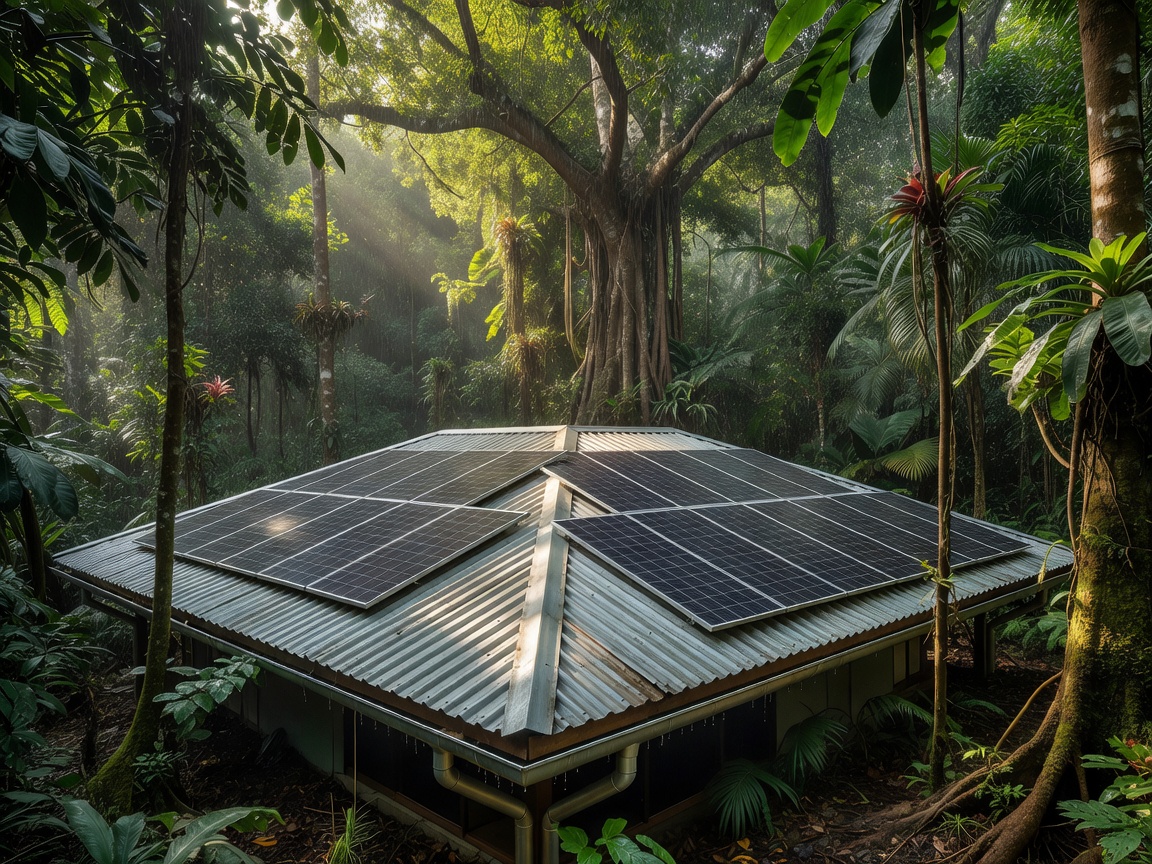
Buildings That Explain Their Own Footprint
In a conventional tourist resort, pipes, generators, and waste streams vanish behind manicured walls. In a working research lodge—whether at Tambopata Research Center upriver in Peru’s Madre de Dios basin or in the misty ridges around Costa Rica’s Monteverde Cloud Forest Biological Reserve—infrastructure sits in plain sight because staff and guests depend on its reliability.
Notice the roofline first. Steeply pitched overhangs shed violent tropical downpours away from unsealed timber walls while funneling clean roof runoff into screened cisterns. Instead of glass windows and air-conditioning compressors—which guzzle fuel and seal guests off from forest acoustics—sleeping quarters rely on fine copper or nylon mesh screens, raised floorboards, and wide roof vents that draw cool night air up through the room.
Living inside screened timber rooms changes how you hear the rainforest. You learn to distinguish distant howler monkey troops from wind gusts before a squall, and you immediately notice why a single bright white porch bulb would draw thousands of moths away from their nocturnal pollination routes.
Four Engineering Lessons Built Into Field Lodges
Many tropical stations publish their operational constraints on chalkboard notices in the dining hall. Understanding why those rules exist helps visitors cooperate cheerfully rather than treating off-grid systems as inconveniences.
-
Shared Solar & Lab-First Power Budgets
Under dense cloud cover, solar banks prioritize vaccine fridges, specimen drying ovens, and acoustic-data hard drives over guest hairdryers. Stations like Tiputini Biodiversity Station and riverine lodges in the Amazon run battery banks calibrated for steady low-draw LED lighting and laptop charging hours.
-
Bio-Digesters & Planted Reed Beds
Because tropical clay soils saturate rapidly during monsoon seasons, standard septic fields fail and contaminate forest creeks. Thoughtful lodges route sink and shower water through grease traps into lined wetland beds planted with native heliconias and sedges, whose root microbes digest nutrients before water returns to the soil.
-
Elevated Timber & Composite Boardwalks
Foot traffic over thin rainforest topsoil crushes root mats and severs amphibian migration routes. Elevated walkways resting on hand-dug concrete piers allow runoff, leaf litter, and small mammals to pass unhindered beneath guests’ boots.
-
Warm-Amber & Shielded Exterior Lighting
Full-spectrum white floodlights disrupt nocturnal insect navigation and expose roosting birds to predators. Research lodges use downward-hooded warm amber LEDs (<2700 K) along stairs and turn exterior walkways off completely after evening briefings.
| Lodge System | Conventional Practice | Research-Lodge Adaptation | Guest Habit Required |
|---|---|---|---|
| Room Cooling | Diesel-backed split AC behind sealed glass | Cross-ventilated screened cabins under tree shade | Keep screen doors latched; pack breathable cotton or wool |
| Water Heating | High-watt electric boilers | Solar thermal roof collectors or ambient-temperature showers | Take short showers on overcast days |
| Dry Storage | Constant room dehumidifiers | Central insulated "dry cabinet" heated by a single low-watt bulb | Store camera lenses and field notebooks in the shared dry box |